


2 Go ou 4 Go de LPDDR4 et 16 Go d’eMMC
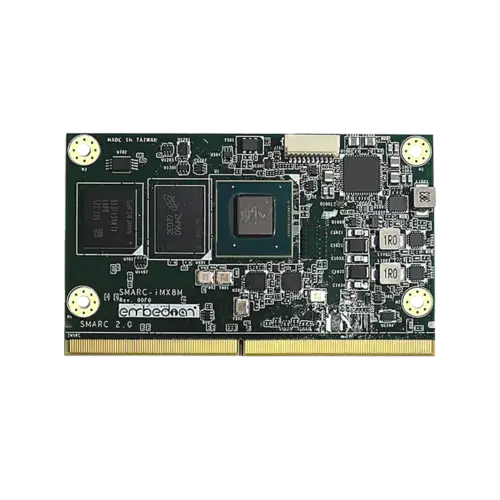
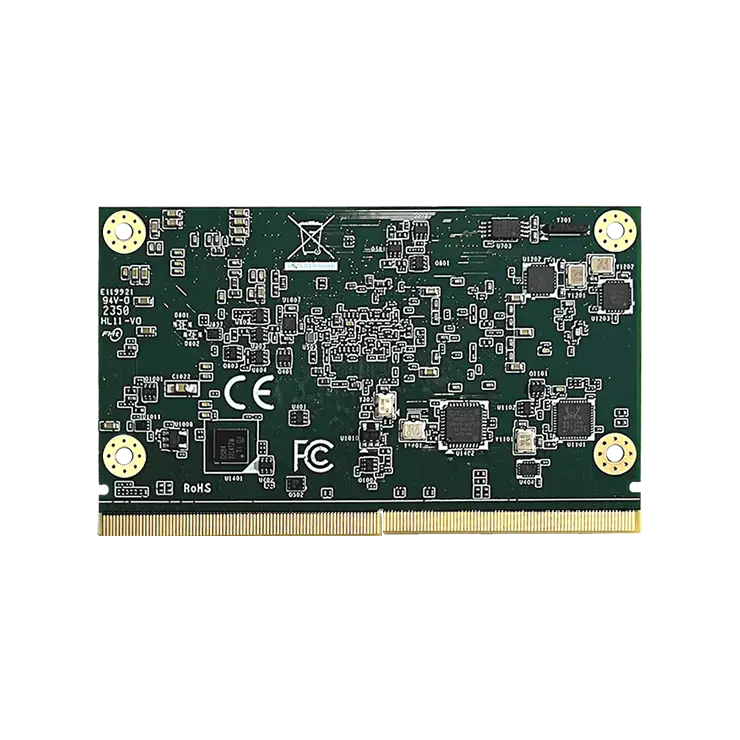
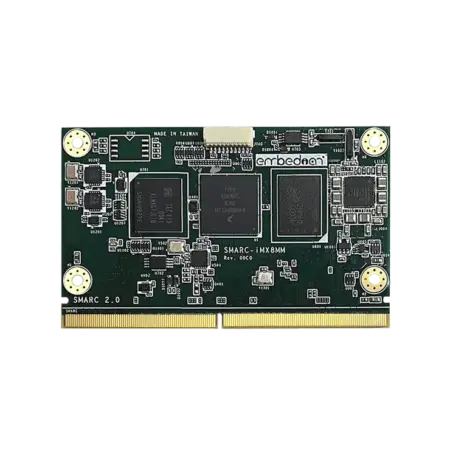
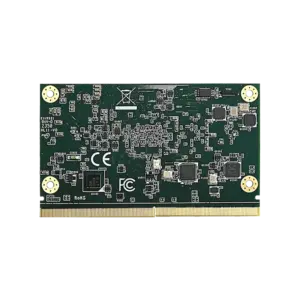
SMARC-iMX8M NXP SMARC 2.0 Module sur Système (SoM)
- ARM Cortex-A53 quadricœur / bicœur, 1,5 GHz
- Coprocesseur temps réel ARM Cortex-M4, 266 MHz
- Conforme à la norme SMARC 2.0 (82 mm × 50 mm)
- Disponibilité garantie jusqu’en 2038
Points forts | |

| |
Yocto Project, Ubuntu, Debian, Android, Linux et RTOS | |

| |
Accélérez la conception de votre produit | |
 Spécifications
Specifications | ||
Technical Information | ||
Compliance | SMARC 2.0 Compliant | |
Dimension (W x L) | 82mm x 50mm | |
CPU |
| |
GPU |
| |
VPU |
| |
Main Memory |
| |
Display |
| |
Camera Interface |
| |
SDIO | One SDIO interface
| |
SPI | Two SPI interfaces with two chip selects per SPI channel. | |
I2S | Two I2S interfaces
| |
I2C | Six I2C interfaces
| |
UART |
| |
CAN Bus | Two CAN 2.0b interfaces (via Microchip MCP2515 SPI to CAN bridge)
| |
USB |
| |
PCIe |
| |
Gigabit Ethernet |
| |
Real-Time Clock (RTC) | External Seiko S35390A controller on module | |
General Purpose I/O | 12 x GPIO Signals, specific alternate functions are assigned to some GPIOs
| |
System and Power Management Signals |
| |
Power Consumption |
| |
Heat Sink | VTT-HS-8J066
| |
Boot Source Select | Three pins to allow selection from carrier board. Select options include to boot from one of the following:
| |
Power Supply | ||
3V to 5.25V | Operates directly from single level Lithium Ion cells, or fixed 3.3V or 5V power supply
| |
Temperature | ||
Industrial Temperature Range | -40 degree C ~ 85 degree C | |
Commercial Temperature Range | 0 degree C ~ 60 degree C | |
Storage Temperature Range | -40 degree C ~ 150 degree C | |
Junction Temperature Range | -40 degree C ~ 150 degree C | |
Form Factor | ||
SMARC 2.0 | 82 mm x 50 mm by SMARC 2.0 Specification | |
Ressources de conception
Guides logiciels
Yocto Comprehensive Yocto developer guide for building, customizing embedded Linux systems

| Debian Comprehensive Debian developer guide for building, customizing embedded Linux systems

| Ubuntu Comprehensive Ubuntu developer guide for building, customizing embedded Linux systems

| Android Comprehensive Android developer guide for building, customizing embedded Linux systems

|
SMARC-iMX8M NXP SMARC 2.0 Module sur Système (SoM)
- Conformité au module SMARC v2.0+
- Plateforme de mise en service SMARC v2.0+ pour le développement matériel et logiciel
- Plateforme d’évaluation et de validation du module SMARC 2.0+
- Référence de conception de carte porteuse client
- Support technique prioritaire fourni par Embedian
[wptb id="7076" not found ]
Packing Lists | |
|
| |
Evaluation Bseboard Features | |

| |
Informations de commande

Notes |
1 |
2 |
3. I: Industrial Temperature (-40 degree C ~ 85 degree C); Leave it blank if commercial temperature. |
4. C: Conforrmal Coating (Only support it for industrial temperature variants and at the mass production stage); Leave it blank if not needed. |
Examples |
Description: Quad core Cortex-A53 i.MX8M processor SMARC 2.0 module with 4GB LPDDR4, Industrial Temperature (-40 degree C ~ 85 degree C) |
Description: Quad core Cortex-A53 i.MX8M processor SMARC 2.0 module with 2GB LPDDR4, Commercial Temperature (0 degree C ~ 60 degree C) |
Optional Accessories |
P/N: VTT-HS-8J066 Heat Sink |
Packing List |