¿Necesitas ayuda? Chatea con nosotros WhatsApp

Please, enable Compare.
Envíe su solicitud y reciba un presupuesto detallado, adaptado a sus necesidades, en un plazo de 24 horas.
Envío - Normalmente se realiza en tres días hábiles

La compra en línea ofrece comodidad durante la fase de desarrollo de muestras. Para pedidos más grandes, haga clic en el botón «Solicitar un presupuesto» arriba. Le ofreceremos un precio mucho más ventajoso.

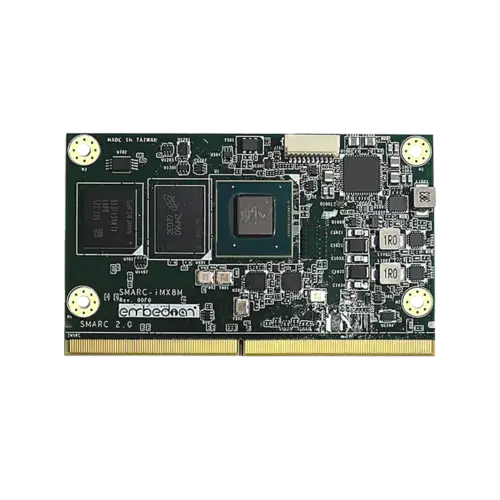
SMARC-iMX8MP

$165


  • NXP i.MX8M PLUS 4 × Cortex-A53 @1.8GHz
  • 2GB/4GB/6GB LPDDR4, 16GB eMMC
  • Unidad de procesamiento neuronal AI/ML
  • HDMI, LVDS, 2 × GbE, 2 × MIPI-CSI
  • 2 × CAN-FD, 4 × UART, 6 × I2C, 2 × I2S, 1 × PCIe3, 2 × SPI, 4 × USB 2.0, 1 × USB 2.0 OTG, 2 × USB 3.0


or
SKU: SMARC-iMX8MP-Q-2G Categories: Tag:

Compartir:

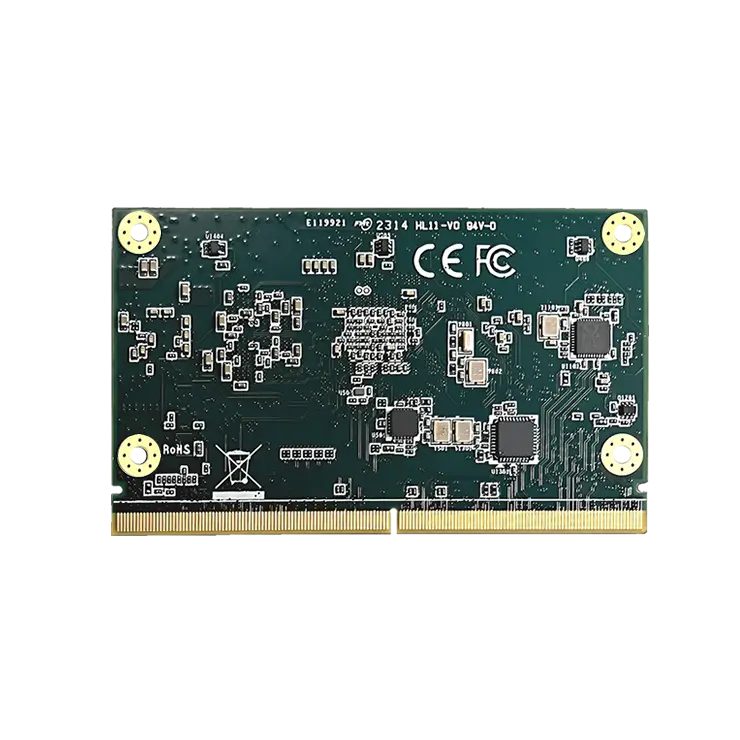
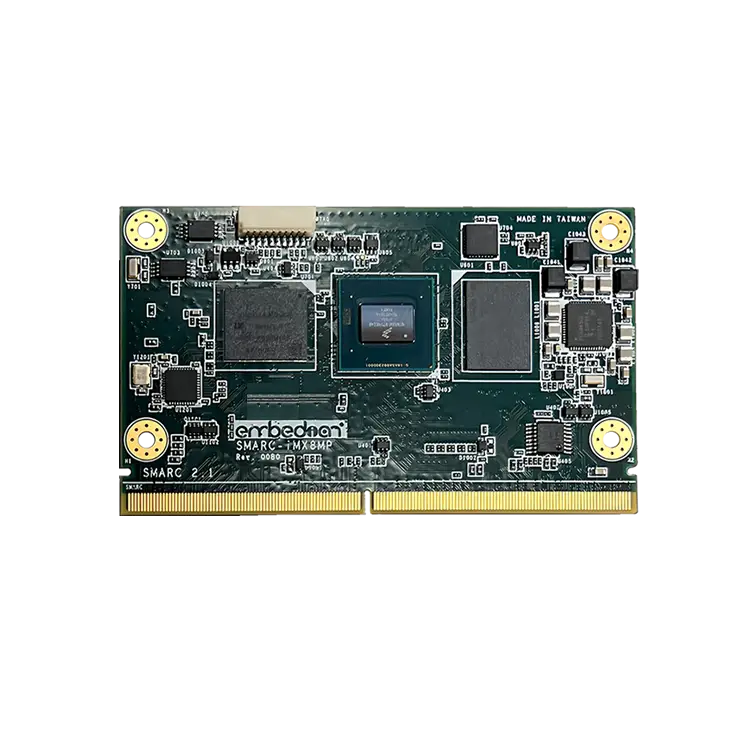
SMARC-iMX8MP NXP SMARC 2.1 Módulo del sistema


  • ARM Cortex-A53 de cuatro/dos núcleos, 1,8 GHz
  • Coprocesador en tiempo real ARM Cortex-M7, 800 MHz
  • Unidad de procesamiento neuronal AI/ML integrada de 2,3 TOPS
  • Compatible con SMARC 2.1 (82mm x 50mm)
  • Disponibilidad garantizada hasta 2038

Aspectos Destacados


2 GB, 4 GB o 6 GB de LPDDR4 y 16 GB eMMC

Unidad de procesamiento neuronal AI/ML integrada (2,3 TOPs)


HDMI (4Kp30), LVDS de doble canal de 24 bits (1080p), MIPI-DSI (1920×1440p60) y 2 × MIPI-CSI (2 carriles y 4 carriles)


GPU (OpenGL ES 3.0, OpenCL 1.2, Vulkan)


VPU (Decodificación de video: 1080p60, H.265/4, VP9, VP8; Codificación de video: 1080p60, H.265/4)


2 × GbE con TSN, 2 × USB 3.0, 1 × USB OTG, 4 × USB 2.0, 2 × CAN-FD, 4 × UART, 6 × I²C, 2 × I²S, 1 × PCIe 3.0 (1 carril), 2 × SPI, TPM, 1 × SDIO, 12 × GPIO


Amplio rango de temperatura: -40°C a 85°C


Yocto Project, Ubuntu, Debian, Android, Linux y RTOS


Paquete completo de soporte de placa (BSP) con imágenes listas para usar


BSP de Yocto Project, Ubuntu, Debian y Android


Actualizaciones y mantenimiento continuos del BSP


Acelere el diseño de su producto


Paquete completo de diseño de placa portadora: esquemas, lista de materiales (BOM), diseño de PCB y archivos 3D STEP


Soporte técnico directo por ingenieros de diseño de Embedian


Revisión de diseño gratuita por ingenieros de Embedian


Depuración de la placa portadora por ingenieros de diseño de Embedian


Servicio de adaptación de controladores para paneles LCD personalizados

hardware document Especificaciones

Specifications


Technical Information

Compliance

SMARC 2.1 Compliant

Dimension (W x L)

82mm x 50mm

CPU


NXP i.MX8M PLUS 4 x Cortex-A53 @1.8GHz


Real-time 800MHz ARM Cortex-M7

GPU


GC7000 Ultra Lite (3D) and GC520L (2D)


Supports OpenGL ES 3.1/3.0, Vulkan, Open CL 1.2 FP, OpenVG 1.1 and G2D


Supports upto 4Kp30 resolutions

VPU


Video Decode: 1080p60, h.265/4, VP9, VP8


Video Encode: 1080p60, h.265/4

NPU


2.3 TOP/s Neural Network performance


Keyword detect, noise reduction, beamforming


Speech recognition (i.e. Deep Speech 2)


Image recognition (i.e. ResNet-50)

Main Memory


32-bit 2GB/4GB/6GB LPDDR4 up to 3200MT/s


16GB eMMC (5.x) onboard


AT24C32 EEPROM onboard

Display


HDMI 2.0a (up to 4Kp30)


Dual Channel LVDS display (up to 1920x1200@60Hz)


MIPI DSI (up to 1920x1440p60)

TPM


Support TPM 2.0

Camera Interface


1 x 2-lane and 1 x 4-lane MIPI-CSI

SDIO

One SDIO interface


1 x 4-bit SDIO card interface with support lines

SPI

Two SPI interfaces with two chip selects per SPI channel.

I2S

Two I2S interfaces


Typically used for connection to I2S audio CODECs

PCIe


1 x PCIe Gen 3.0 (1-lane)


Common PCIe wake signal

I2C

Six I2C interfaces


Power Management


General Purpose


Camera 0


Camara 1


LCD Display ID


HDMI

UART


Four asynchronous serial ports


Two ports supporting four-wire handshaking (RXD, TXD, RTS#, CTS#).


Two ports supporting data-only signals (RXD, TXD).

FlexCAN Bus

Two CAN-FD interfaces


Logic level signals from Module based FlexCAN bus protocol controllers


RXD and TXD only

USB


One USB OTG 2.0 Ports with PHY


Four USB 2.0 Host with PHY


Two USB 3.0 Host with PHY

Gigabit Ethernet


Two GbE MDI interfaces


Realtek RTL-8211FD-CG PHY on module


No magnetics on Module


LED support signals

Real-Time Clock (RTC)

External Seiko S35390A controller on module

General Purpose I/O

12 x GPIO Signals, specific alternate functions are assigned to some GPIOs


PWM / Tachometer capability


Camera support


CAN Error Signaling


HD Audio reset

System and Power Management Signals


Reset Out and Reset In


Power Button Input


Power Source Sataus


Module Power State Status


System Management Pins


Battery and Battery Charger Management Pins


Carrier Power On Control Pins

Power Consumption


3.5W (Typical)


5.2W (Max)

Heat Sink

VTT-HS-8J066B1


Note: i.MX8M Plus needs heat sink

Boot Source Select

Three pins to allow selection from carrier board. Select options include to boot from one of the following:


Module eMMC Flash (Default)


Network Boot


Carrier SD Card (Recovery)

Power Supply

3V to 5.25V

Operates directly from single level Lithium Ion cells, or fixed 3.3V or 5V power supply


1.8V VDDIO

Temperature

Industrial Temperature Range

-40 degree C ~ 85 degree C

Commercial Temperature Range

0 degree C ~ 60 degree C

Storage Temperature Range

-40 degree C ~ 150 degree C

Junction Temperature Range

-40 degree C ~ 150 degree C

Form Factor

SMARC 2.1

82 mm x 50 mm by SMARC 2.1 Specification

hardware document Recursos de diseño


hardware document Guías de software

Yocto

Developer's Guide

Comprehensive Yocto developer guide for building, customizing embedded Linux systems

Debian

Developer's Guide

Comprehensive Debian developer guide for building, customizing embedded Linux systems

Ubuntu

Developer's Guide

Comprehensive Ubuntu developer guide for building, customizing embedded Linux systems

Real-Time Edge

Developer's Guide

Real-Time Edge Software enables deterministic Linux, industrial networking, low latency applications.

Android

Developer's Guide

Comprehensive Android developer guide for building, customizing embedded Linux systems

SMARC-iMX8MP NXP SMARC 2.1 Módulo sobre Sistema (System-on-Module)


  • Cumple con el estándar de módulo SMARC v2.0+
  • Plataforma de arranque SMARC v2.0+ para el desarrollo de hardware y software
  • Plataforma de evaluación y validación de módulos SMARC 2.0+
  • Referencia de diseño de placa portadora para clientes
  • Soporte técnico prioritario proporcionado por Embedian

Ordering Info.


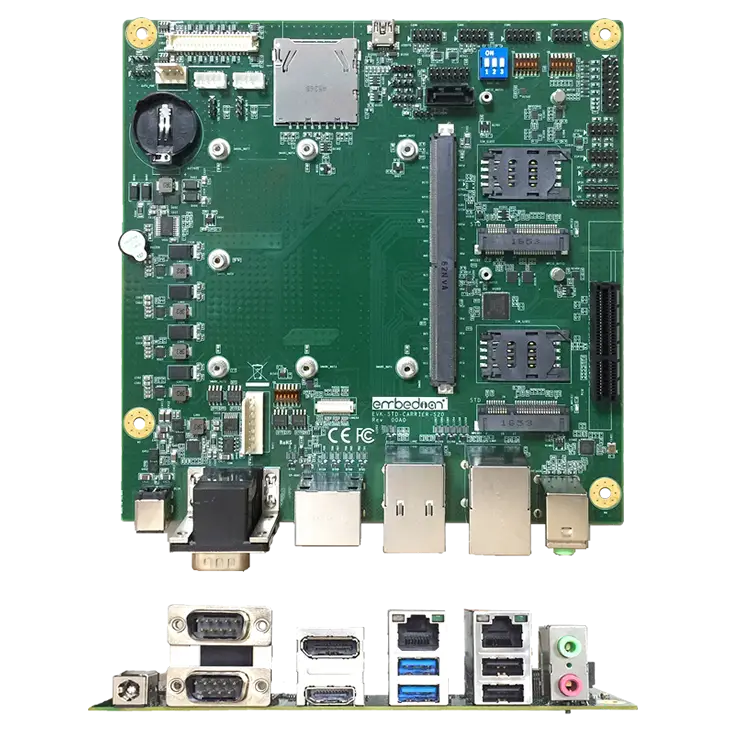
Part Number: EVK-STD-CARRIER-S20


Packing Lists


1 x EVK-STD-CARRIER-S20 carrier board


4 x M2.5 screws


1 x bootable SDHC card with image pre-installed (only when purchase together with Embedian SMARC modules)


1 x LVDS cable


1 x LVDS LCD Backlight cable


1 x 12V/3.5A Power Supply


1 x SATA Power cable


1 x 10-way box header to DB9 cable (for console or RS232)


SMARC module not included)


Evaluation Bseboard Features


DC +12V ~ +24V Power input with 2.5mm DC Jack


Accept 1.8V VDDIO SMARC 2.0+ compliant module


Supports all SMARC 2.0+ I/O interfaces


Form factor: 170mm (L) x 170mm (W) (mini-ITX form factor)

hardware document Información de pedido

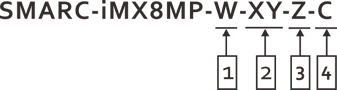
Part Number

Notes

1.

  • Q: Quad Core Cortex-A53

  • D: Dual Core Cortex-A53

2.

  • 2GB: 2GB LPDDR4 memory

  • 4GB: 4GB LPDDR4 memory

  • 6GB: 6GB LPDDR4 memory

3.

  • I: Industrial Temperature (-40 degree C ~ 85 degree C); Only industrial temperature option for this part.

4.

  • C: Conforrmal Coating (Only support it for industrial temperature variants and at the mass production stage); Leave it blank if not needed.

Example

  • Part Number: SMARC-iMX8MP-Q-2G-I

Description: Quad core Cortex-A53 i.MX8M PLUS processor SMARC 2.1 module with 2GB LPDDR4, Industrial Temperature (-40 degree C ~ 85 degree C)

  • Part Number: SMARC-iMX8MP-Q-4G

Description: Quad core Cortex-A53 i.MX8M PLUS processor SMARC 2.1 module with 4GB LPDDR4, Commercial Temperature (0 degree C ~ 60 degree C)

Optional Accessaries

Heat Sink

  • P/N: VTT-HS-8J066B1

Description: Heak sink for SMARC-iMX8MP and SMARC-iMX8

¿Por qué elegir Embedian?

Partenaire EBS de NXP

Cuenta Directa TI

Una cultura de alta calidad y eficiencia

Dedicados a la plataforma ARM Cortex durante 20 años.